 Image generated with AI
Released in the summer of 1917, The Immigrant is one of the best loved of the twelve short films Charlie Chaplin made for the Mutual company. This two-reel comedy, roughly twenty minutes long, consists of little more than a sea voyage, a restaurant scene and a love story that ends on a rainy street. Yet inside that simple structure lies a feeling that would nourish all of Chaplin's later great films: the struggle of a poor, foreign and friendless person to keep his dignity.
The Mutual Years: The Price and Reward of Freedom
When Chaplin signed with the Mutual Film Corporation in 1916, he became one of the highest-paid performers of his day. A salary of ten thousand dollars a week plus a signing bonus brought his yearly earnings to 670,000 dollars. But the real prize was not the money; it was freedom. He could make films in his own studio, with his own company, taking as much time as he needed. Edna Purviance, Eric Campbell, known for his hulking villains, Albert Austin and Henry Bergman were the regular players of this period.
In later years Chaplin would remember the Mutual period as the happiest of his career. Films such as The Pawnshop, The Rink and Easy Street were made in these years. The Immigrant is perhaps the most emotional link in the series; here, for the first time, the fast pace of comedy and Chaplin's deepening melancholy meet in such fine balance.
First the Restaurant, Then the Ship
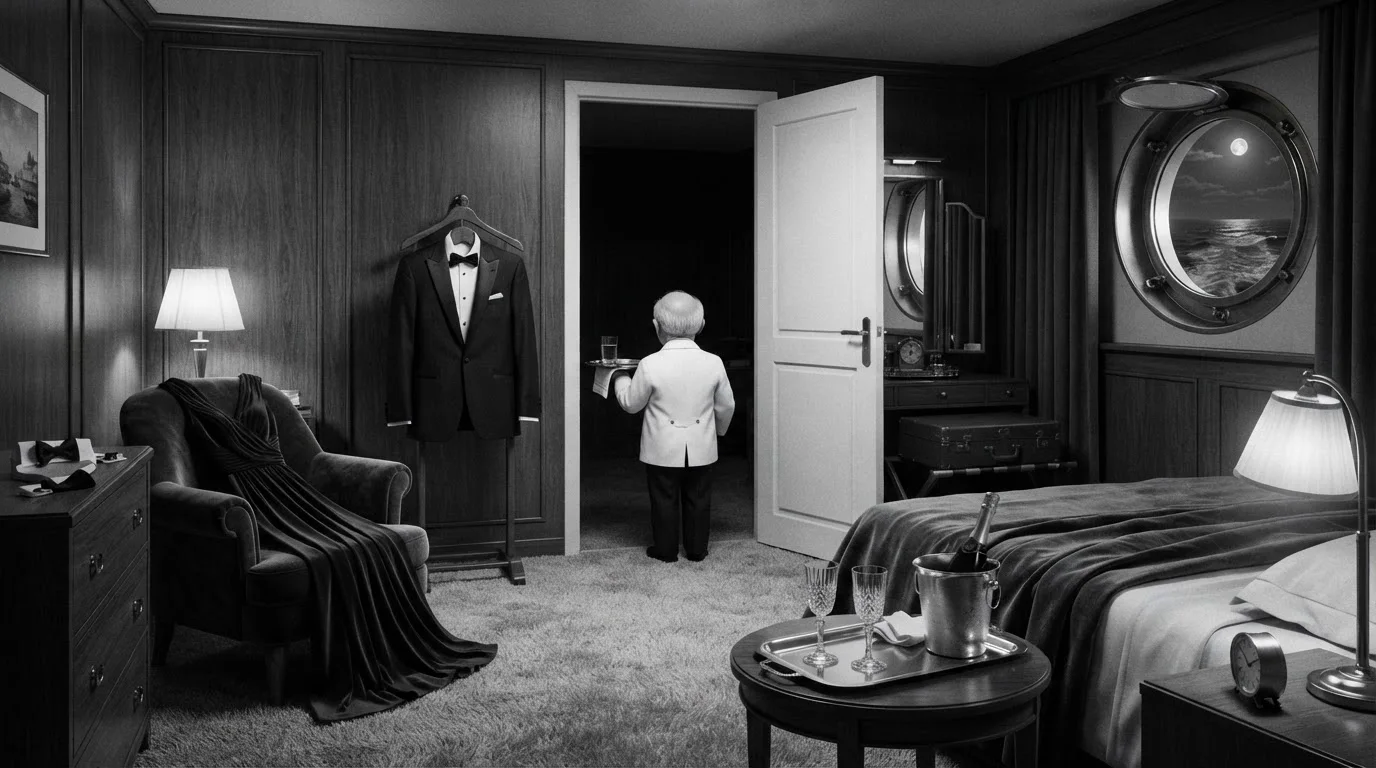
The story of how the film was made is a unique window into Chaplin's working method. Kevin Brownlow and David Gill's 1983 documentary Unknown Chaplin, built on rescued outtakes, brought this process to light. Chaplin did not begin with a script but with a setting: a restaurant. He shot the scene again and again, moved the actors around, and rebuilt the waiters, the customers and even the arrangement of the tables.
As the restaurant scene took shape, Chaplin asked himself who these two poor people were and how they had got there. The answer became the sea voyage that forms the first half of the film. In other words, the story was built from the end backwards. According to Brownlow, Chaplin used an extraordinary amount of film for this short; every gesture and every glance was repeated until it found the right rhythm. That meticulousness was an early sign of the perfectionism of his feature-film years.
The Rolling Deck
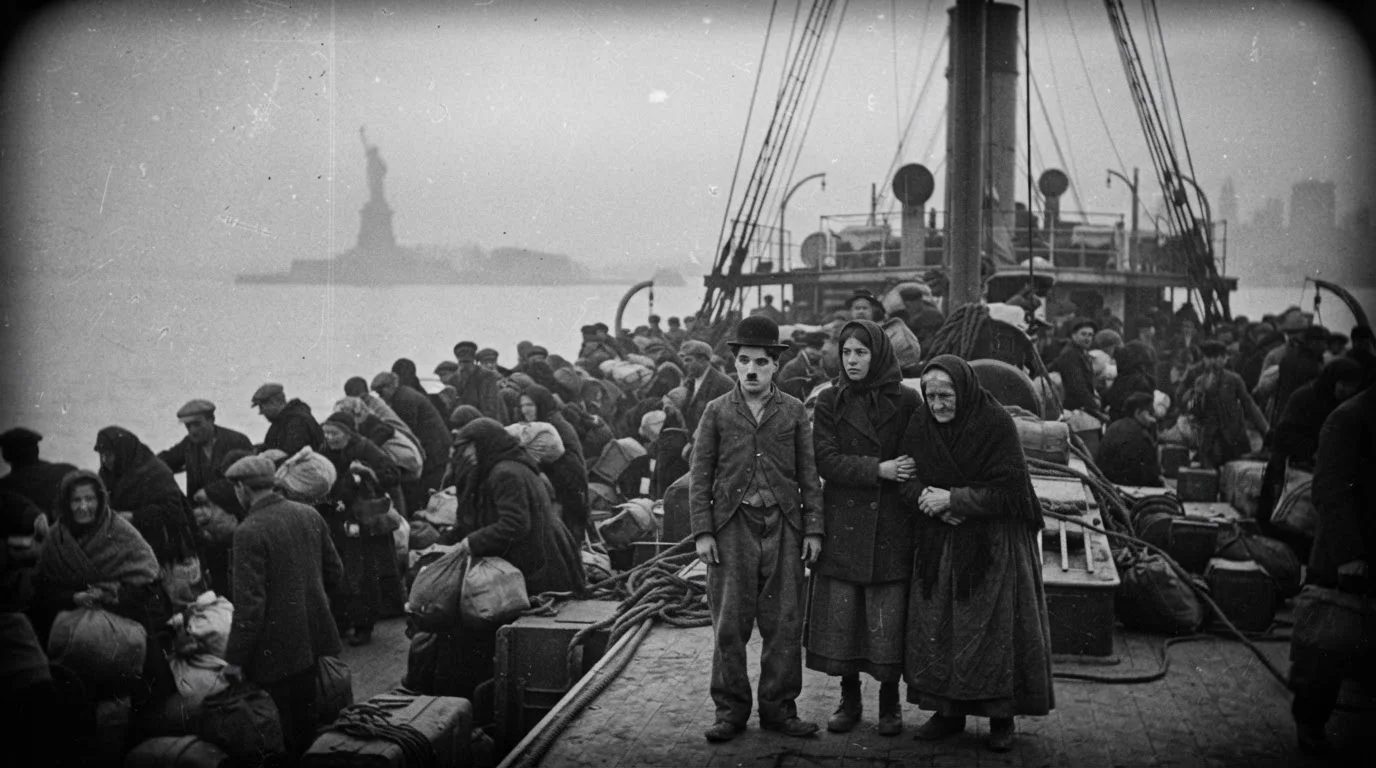
The film opens on an immigrant ship pitching in a stormy sea. Passengers are thrown from side to side and plates slide across the table. Our first sight of Chaplin is an illusion: leaning over the rail, his back heaving, he looks seasick. Then he turns around and we see he has hooked a fish on his line. This little gag shows how much Chaplin loved playing with the audience's expectations.
On board, the Tramp meets the young woman played by Edna Purviance and her ailing mother. The woman's money has been stolen. The Tramp slips the money he has won at a card game into her pocket without anyone noticing. There is no heroic speech; as in Chaplin's later films, kindness is done with a quiet, almost bashful gesture.
In these scenes Edna Purviance shows once again why she was Chaplin's most trusted partner. She avoids broad gestures; her calm face makes a lovely contrast with the Tramp's restless movements. The two appeared together in more than thirty films from 1915 onwards, and in the shorts she became almost a symbol of tenderness and hope. The young woman she plays here is not merely waiting to be rescued; she is tired, grieving and proud, and the brief glances on deck prepare the ground for their reunion.
"Arrival in the Land of Liberty"
The film's most discussed moment lasts only a few seconds. As the ship nears New York, the passengers catch sight of the Statue of Liberty and rush joyfully to the deck. An intertitle announces their arrival in the land of liberty. Immediately afterwards, officials rope the immigrants off and herd them into a corner like cattle. The contrast between the statue's promise and the reality of the rope is told with a single cut.
Moments later, the Tramp takes his own small revenge with a quick kick at the back of a passing official. The audience laughs, but an unease lingers beneath the laughter. This is the essence of Chaplin's comedy: it shows an injustice while making us laugh, yet it never preaches.
A Coin That Slips Away
In the second half, the Tramp, hungry and penniless, walks into a restaurant with a coin he has found in the street. There he meets the young woman from the ship again; she is now alone, and a small detail, the black-bordered handkerchief in her hand, tells us that her mother has died. Chaplin conveys grief here without a single word.
Then comedy takes over once more. The Tramp discovers that his coin has fallen through a hole in his pocket. Meanwhile the enormous head waiter, played by Eric Campbell, and his colleagues beat up a customer who cannot pay his bill and throw him out. From then on every move the Tramp makes is an attempt to escape that fate: finding the fallen coin, losing it, finding it again; glancing at the waiter's tip plate; leaving his coffee unfinished to buy time. Suspense and laughter grow together.
Rescue comes from an unexpected quarter: an artist offers the young couple work as models and tries to pay the bill. The Tramp pretends, out of pride, to refuse a few times; Chaplin draws a man who will not give up his dignity even at his most desperate.
A Story That Ends in the Rain
The film ends with the two young people, armed with an advance from the artist, arriving at the door of a marriage licence office. It is raining. The young woman hesitates; the Tramp sweeps her up and carries her inside. The scene is short, simple and surprisingly warm. It is an ending we rarely see in the Tramp's stories; here he does not walk away alone but finds someone.
Through an Immigrant's Eyes
It is not hard to see why Chaplin was so attached to this film. He too was an Englishman who had crossed the Atlantic to America in 1910 with Fred Karno's theatre company. He had known childhood poverty, hunger and the workhouse in the poor districts of London. The hungry looks in The Immigrant, the meaning a single coin can carry and the struggle to survive in a foreign country were not abstract themes for him.
Today the film is among the works preserved in the Library of Congress's National Film Registry, to which it was named in 1998. But its real value lies not in archives but in the fact that it still works. More than a century later, these twenty minutes about migration, poverty and a stranger's dignity still make us laugh and think. Here we find one of the first sketches of the great balance Chaplin would reach in his features, that fine line between laughter and tears.