This interview is fiction. Charlie Chaplin died in 1977, and the answers below are not his. Starting from his films, his working habits and the views he was known for, we asked a simple question: what might he say if he were here today?
Picture a garden above Lake Geneva. Chaplin spent the last twenty-four years of his life on that shore, at Corsier-sur-Vevey. There is tea on the table, and next to it a tablet. He looks at the tablet for a long time but doesn't touch it.
"I'd listen to it first"
SessizAdam: There's a tablet in front of you. What's the first thing you'd do?
Chaplin: Listen to it. In The Pawnshop I examined a broken alarm clock with a stethoscope. The best way to get to know an object is to take it seriously, as if it were alive. This thing glows, it buzzes, it makes noises, but I can't find its heart. That's the joke, really: a man searching for the heart of something that doesn't have one.
SessizAdam: Would you actually use it?
Chaplin: For a while. Then we'd fight. My character is always at war with objects: folding chairs, escalators, doors that won't shut. But this would be the hardest opponent of all. It never fights back. It just shows you the next notification.
Silence and notifications
SessizAdam: You held out against talking pictures for years. Now everyone is talking, typing and posting all the time. How would this world look to you?
Chaplin: Noisy. And strangely silent. People sit side by side on a train without saying a word, yet each of them is talking to a different crowd on a screen. I believed in pantomime because a gesture is understood in every language. Today people send each other little faces, hand signs, hearts. So pantomime has come back. Only now it's done with the thumb instead of the whole body.
SessizAdam: Would you turn that into a scene?
Chaplin: At once. The Tramp is sitting in a park across from the girl he loves. Both are staring at their phones. He tries to send her a heart and sends it by mistake to the policeman on the next bench. The policeman looks at his phone, then at the Tramp. You know the rest.
AI and rehearsal
SessizAdam: Today you can generate a film scene with AI in a few minutes. You sometimes spent weeks on a single scene. Would these tools tempt you?
Chaplin: I'd be curious. Then, I suspect, disappointed. I shot scenes over and over because I only found what I was looking for while looking for it. In City Lights I filmed the moment the flower girl hands me a flower again and again. A machine could give me a hundred versions of a scene. I'd still have to look at all hundred to know which one was right. The work isn't making things. It's choosing. And choosing comes from your own hunger, your own embarrassment, the things you remember.
SessizAdam: So you're against machines?
Chaplin: I wasn't against machines in Modern Times either. I was against a system that tried to make people keep pace with them. I'd ask the same thing today: are these tools lightening people's load, or asking them to run faster?
What would the Tramp do for a living?
SessizAdam: If the Tramp were alive today, how would he get by?
Chaplin: He'd be a delivery rider. A huge box on the back of his bicycle, a map on his phone, a clock on the map that keeps turning red. He'd knock on the wrong doors, mix up the orders, give his own dinner to a hungry kid and lose a star on the app for it. That missing star is today's policeman.
SessizAdam: Would he still have the bowler hat and cane?
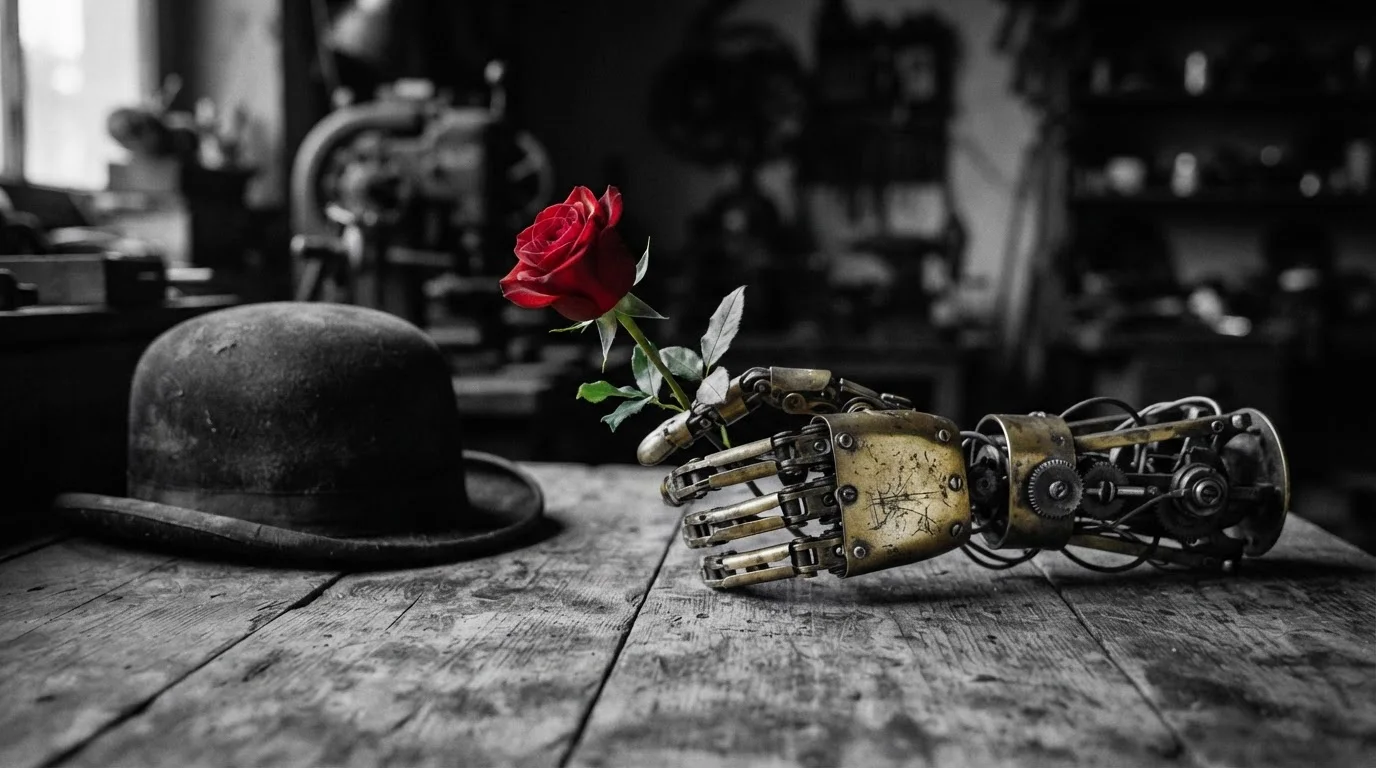
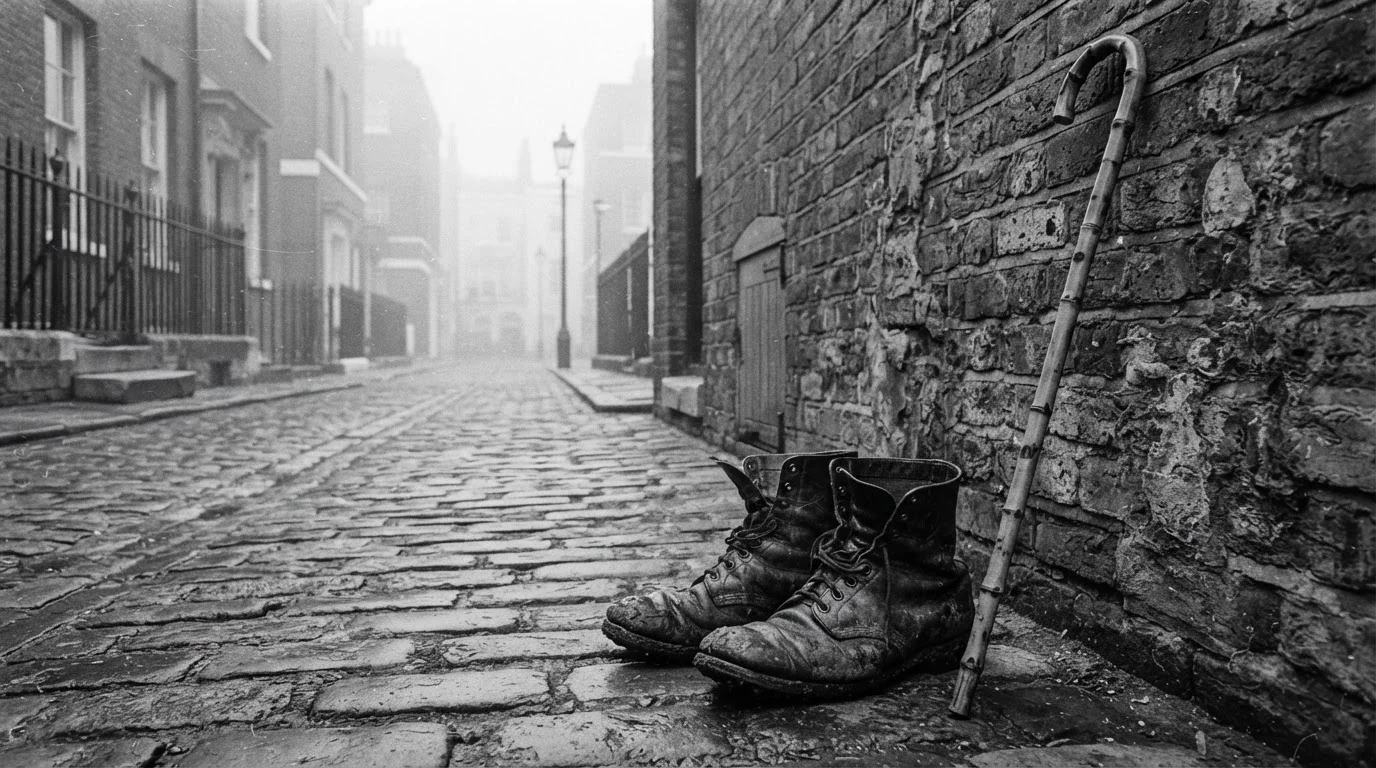
Chaplin: Of course. The costume was a contradiction: tight coat, baggy trousers, worn-out shoes, and yet a dignified walk. I'd find a contradiction for today as well. An old phone with a cracked screen, say, which he holds as if it were the most expensive model there is. Poverty hasn't changed. Only its accessories have.
Does laughter still work?
SessizAdam: One last question. With all these screens and all this speed, will people still laugh at your kind of comedy?
Chaplin: When a man falls down and tries to hang on to his dignity, people laugh. It doesn't matter whether he falls on an ice rink or in front of a screen. The only difference is that now the audience checks their phones even while they're laughing. Maybe the best joke today would be this one: the Tramp's funniest moment goes unseen, because nobody filmed it.
When the interview is over, Chaplin finally picks up the tablet, turns it over in his hands and holds it to his ear. He listens for a while. Then he smiles and puts it back on the table.
This piece is fiction and contains no real quotations from Charlie Chaplin. For his own account of his life, see his 1964 book "My Autobiography".