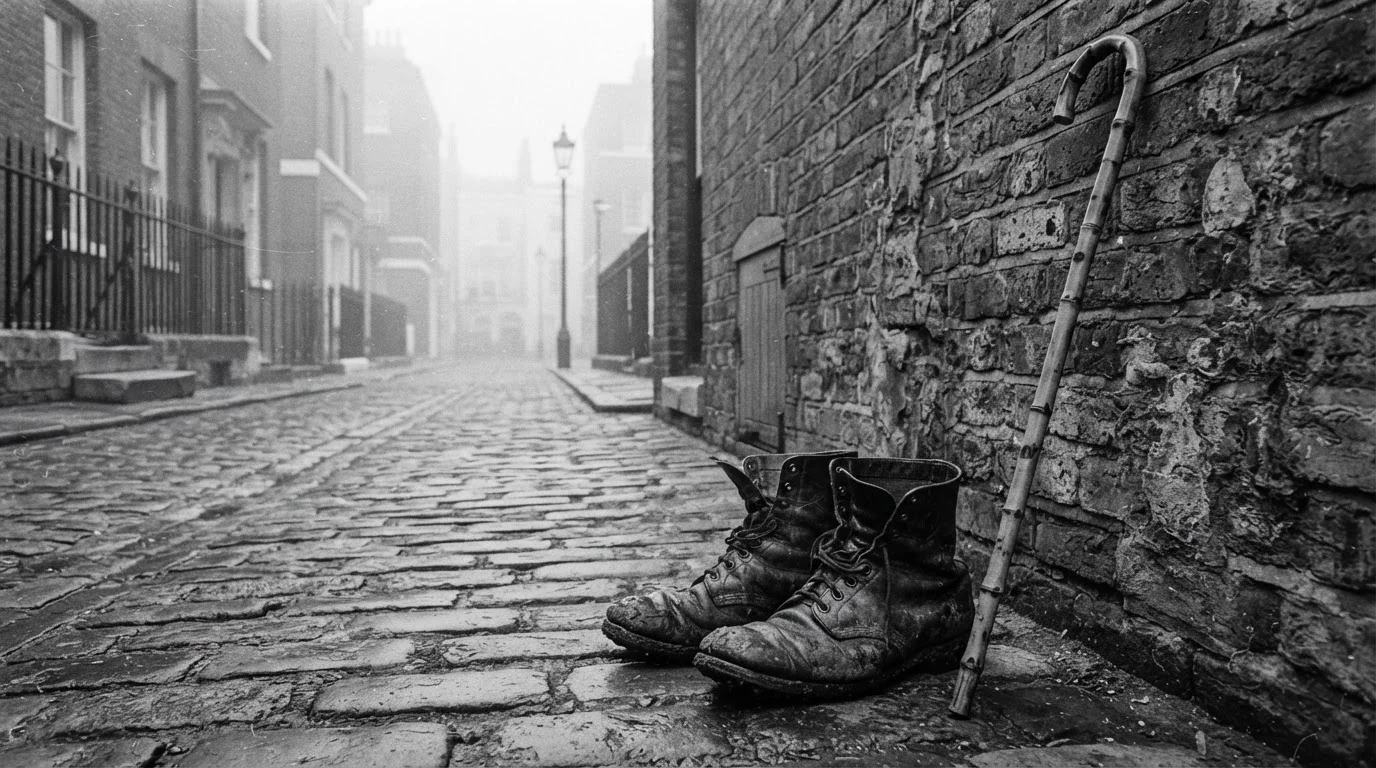
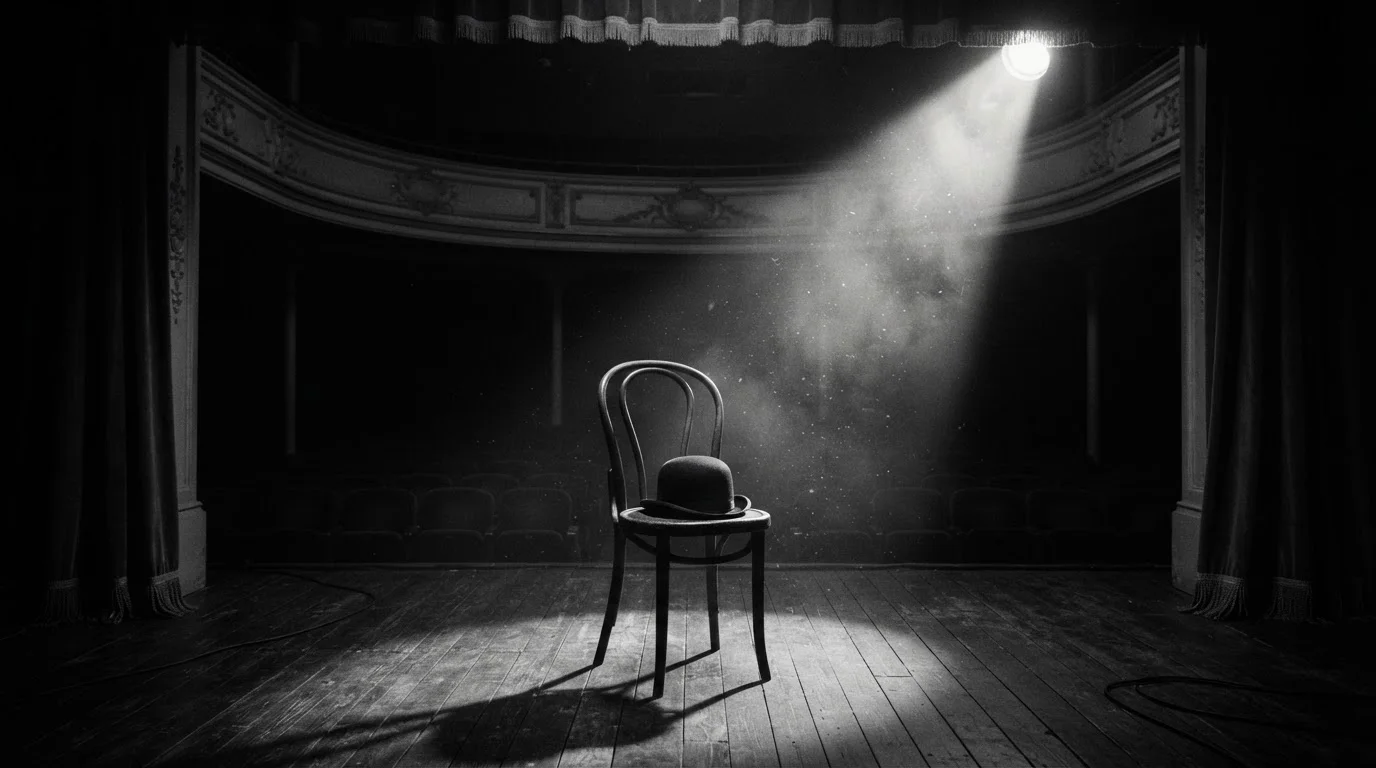
 Image generated with AI
The Seriousness of Laughter: Chaplin's Philosophy of Life
Most of us remember Charlie Chaplin as a funny man who falls over, runs away, hides from the police and eats his own shoe. Yet when you watch his films one after another, you notice a very serious view of the world beneath the laughter. For Chaplin, laughing was not a way of escaping the weight of life, but a way of being able to carry it.
Tragedy in close-up, comedy in long shot
One of the best-known sayings attributed to Chaplin is that life is a tragedy when seen in close-up, but a comedy in long shot. The sentence is also a summary of his film language. When the camera moves close to the Tramp, we see his hunger, his loneliness and his humiliation. When it pulls back, we watch the same man swing his cane and carry on as if nothing had happened. Both are true. Chaplin does not make us choose; he makes us feel both at once.
The humour of someone who knew poverty
This outlook comes from Chaplin's childhood. He grew up in the poor districts of London, ended up in the workhouse with his brother because of his mother's illness, and knew hunger and shame first-hand. That is why the poverty in his films is never a decorative backdrop. The Tramp's patched trousers, his good manners and his pride are the last things left to someone who owns nothing: his dignity.
Chaplin's comedy never laughs at the weak. The one being laughed at is always the powerful: the arrogant rich man, the heavy-handed policeman, the boss who worships the machine, the dictator who thinks he owns the world. When the audience laughs, it is really laughing at that order.
Laughter as resistance
Perhaps the strongest part of Chaplin's philosophy is that he never gives up hope. Most of his films do not end happily, but they do not end in despair either. The Tramp disappears at a crossroads, holding a girl's hand, or walking alone towards the horizon. These scenes tell us that life is hard, unfair and often ridiculous, but that a person can still keep walking.
Trying to look at a problem from a little further away is one of the most practical lessons we can learn from Chaplin. Laughter does not solve the problem. But it gives us the strength to carry it.
Why do we still watch?
The reason silent, black-and-white films made more than a century ago are still watched by millions is not technical but human. The hunger, love, loneliness, injustice and friendship Chaplin portrayed have never aged. With a way of telling stories that needs no language, he captured a feeling understood in the same way all over the world. Perhaps that is his greatest philosophical legacy: people can understand each other without speaking.