 Image generated with AI
The Gold Rush: Hunger, Greed and the Story of a Shoe
The Gold Rush (1925) begins from the story of the thousands of prospectors who rushed to the Klondike at the end of the nineteenth century. As Chaplin tells of the hunger and desperation of people climbing snowy mountains with dreams of wealth, he creates some of the most remembered scenes in film history.
Eating a shoe
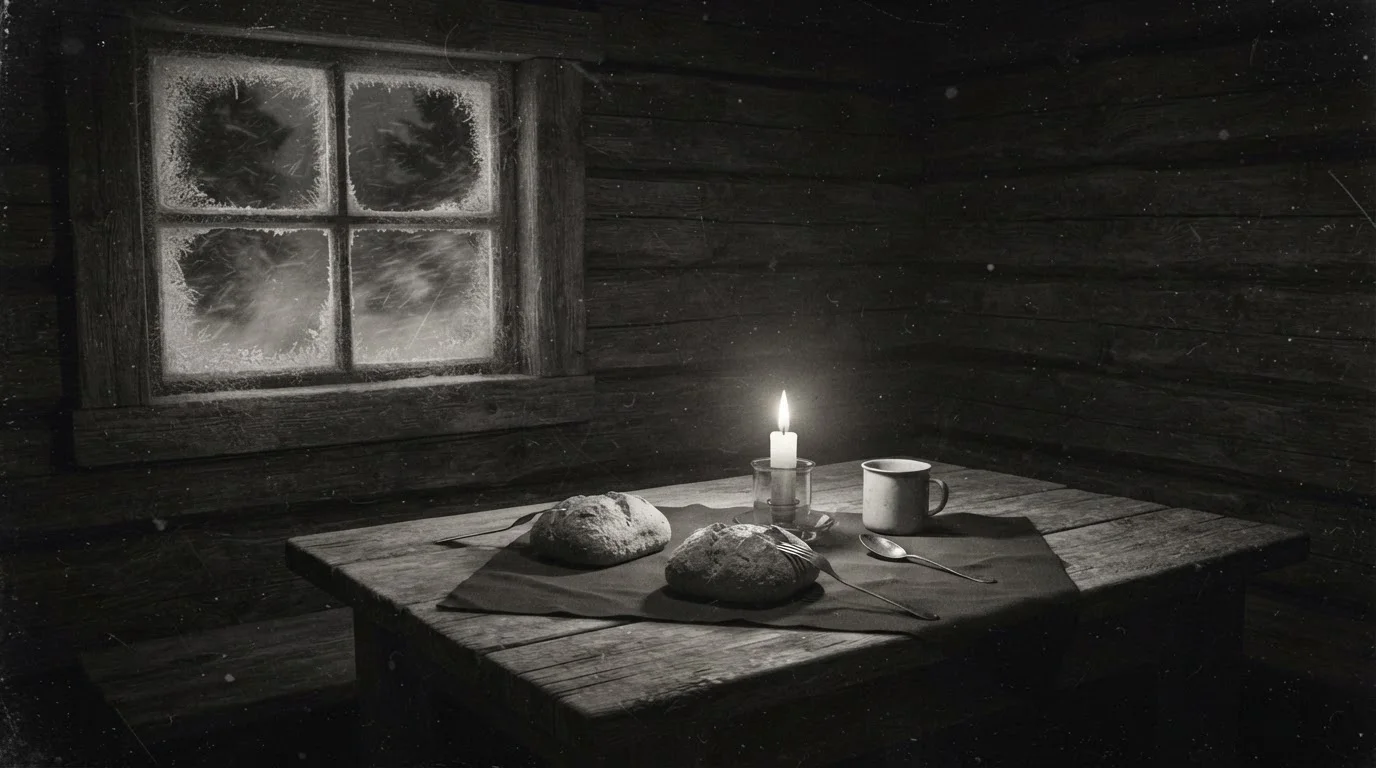
Trapped by a storm, the Tramp and his companion are close to starving. The Tramp boils his shoe and serves it at the table with the gravity of a chef. He twirls the laces on his fork like spaghetti and gnaws the nails like bones. The audience roars with laughter, but the truth behind the scene is bitter: what people are willing to accept when they are hungry.
Chaplin said the scene was inspired by the story of the Donner Party, who were trapped in the snowy mountains in the 1840s and fought starvation. Turning tragedy into comedy is perhaps his greatest skill. While laughing, we stop for a moment as we realise how terrible the thing we are laughing at really is.
The bread roll dance: the grace of loneliness
In another unforgettable scene, at the table he has laid for the girls he expects on New Year's Eve, the Tramp sticks two forks into two bread rolls and makes them dance like little legs. The dance is graceful and joyful. But the scene is in fact the dream of a night when no one came. When the Tramp wakes up, he is alone at his table.
The scene shows the ability to create joy even in loneliness — and how fragile that joy is.
Gold or people?
At the end of the film the Tramp becomes rich. But the real reward is not gold; it is being reunited with the woman he loves. Chaplin makes a clear comparison: the people who cross mountains for gold crush and betray each other, while the Tramp stays loyal to his friend even in the hardest moments.
A note for today
Today, instead of gold, we have cryptocurrencies, promises of quick riches and polished success stories on social media. The Gold Rush reminds us, a hundred years in advance, of the price of that greed and of what truly makes a person rich. Chaplin said this was the film he wanted to be remembered by. Watching it once more is enough to understand why.