 Image generated with AI
The Power of Silence: Why Didn't Chaplin Want to Talk?
When the first feature film with synchronised sound was released in 1927, Hollywood changed completely within a few years. Studios stopped making silent films, and many stars lost their careers because audiences did not like their voices. Chaplin, however, resisted the change for almost ten years. So why did the most famous filmmaker in the world not want to talk?
A universal language
The greatest strength of silent film was that it knew no language barrier. The Tramp's pantomime was understood in the same way in Istanbul, Tokyo and Buenos Aires. Intertitles could be translated, but the real storytelling was in facial expressions, body language and the rhythm of movement. Chaplin feared that by giving his character a voice and a language he would lose his universality. What accent would the Tramp speak with? British or American?
Silent films in a world of sound
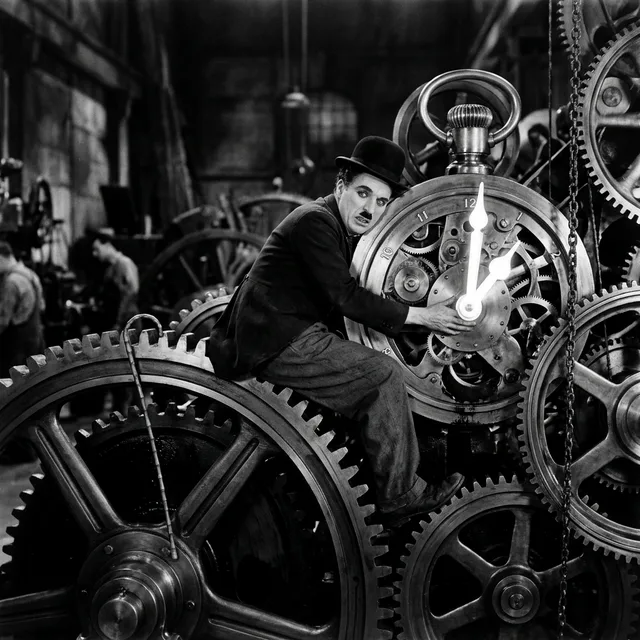
Chaplin made City Lights in 1931 and Modern Times in 1936 without dialogue. These films had music and sound effects — Chaplin composed the music himself — but the characters did not speak. In Modern Times, sound mostly comes from machines, radios and the boss's screens. In other words, it is not the people who speak, but the system that controls them. It feels like a subtle critique of sound itself.
Towards the end of the same film, the Tramp has to sing in a restaurant. He forgets the words and improvises a song of nonsense words that belong to no language. The audience hears Chaplin's voice for the first time — but he still speaks no language at all. It is silent cinema's elegant farewell to the talkies.
When he finally spoke
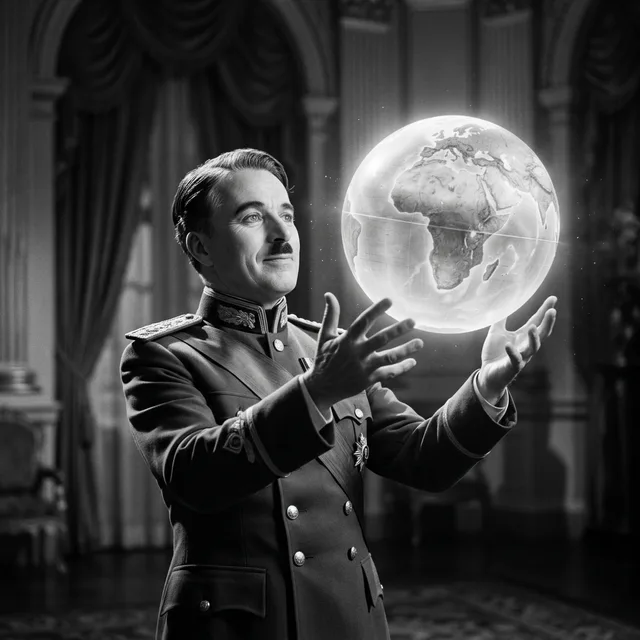
Chaplin made his first full talkie, The Great Dictator, in 1940. And when he decided to speak, he had something very important to say. The long speech at the end of the film is an appeal for humanity, reason and kindness against fascism. It is as if, after years of silence, he spoke at the very moment when staying silent was no longer possible.
The value of silence today
In an age when everything is shouted and everyone talks about everything, Chaplin's silence takes on new meaning. Sometimes a look, a gesture or a smile can say far more than long sentences. Chaplin reminds us that silence is not a lack, but a way of telling.